


Reflective Writing – Langley Hall Park.
For our collaborative project we designed a brief that considered how a series of interventions we designed as a group will enhance the site; while connecting and engaging with the nature, whilst also respecting the biodiversity. In order to achieve our outcome, we worked in groups to produce 3D concept models at different scales.
I really enjoyed working alongside my peers to explore a range of ideas using mixed media and experimenting our design ideas. What I particularly liked was that although we all belonged to different courses it was quite interesting to see everyone’s different approach and how we tackled each given task.
Within working in a group comes a variety of positives and negatives. At first it was quite difficult to arrange group meeting as everyone had responsibilities, however in order to overcome this we worked alongside each other and arranged video calls when it was best suited to each member of the group. Additionally, we created a ‘WhatsApp’ group chat to ensure each member was updated to update each member of any changes/improvements to our work. Within the group I felt I had a leadership role which I am not previously used to. Although I am grateful for this as I can endure these skills, I have learnt from this and apply this in future tasks.
I designed the woodland signage post, contributed to the site analysis of the site, worked alongside my peer and designed the concept for our intervention and measurements of all our signage posts.
After having done this collaborative project I feel that I have gained experience in Landscape Architecture which I can apply to my own work. I would also be interested in conducting a work experience placement within this field.#


This cooperation, for me, is a real group cooperation. In the previous group cooperation, my team members were all classmates of my major, but in this cooperation, almost all of them studied different majors, which made me feel the diversity of design ideas.
From the very beginning, everyone had different ideas about the design of the site, and everyone stuck to their own ideas. As a result, our team did not agree with each other in the early stage and designed in different directions, making our team work look like four different tasks combined. But through running-in, and more communication, at the later stage we unified our ideas and divided our work.
From this cooperation, I learned:
1. In group work, everyone should actively discuss with team members. Because everyone will have a variety of novel ideas, there will be differences of opinion in the group, but through collective communication and cooperation, brainstorm, you can get a good design idea.
2. In this group cooperation, our group mainly designs signage. Signage is more like product design to me, a new field of design. At first, I thought that the design of signage was just to design its appearance, but it was only through the work of the team members that I realized that the content was also what we needed to design. This will make me more rigorous in the future design, and let me know that small details in every design work need to be considered.
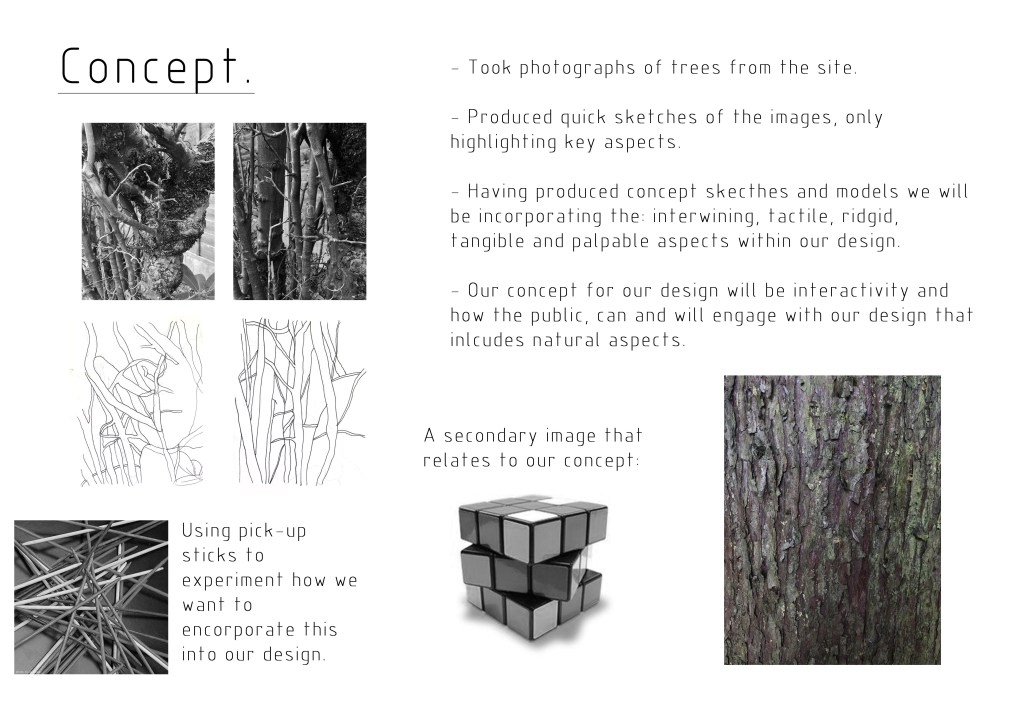
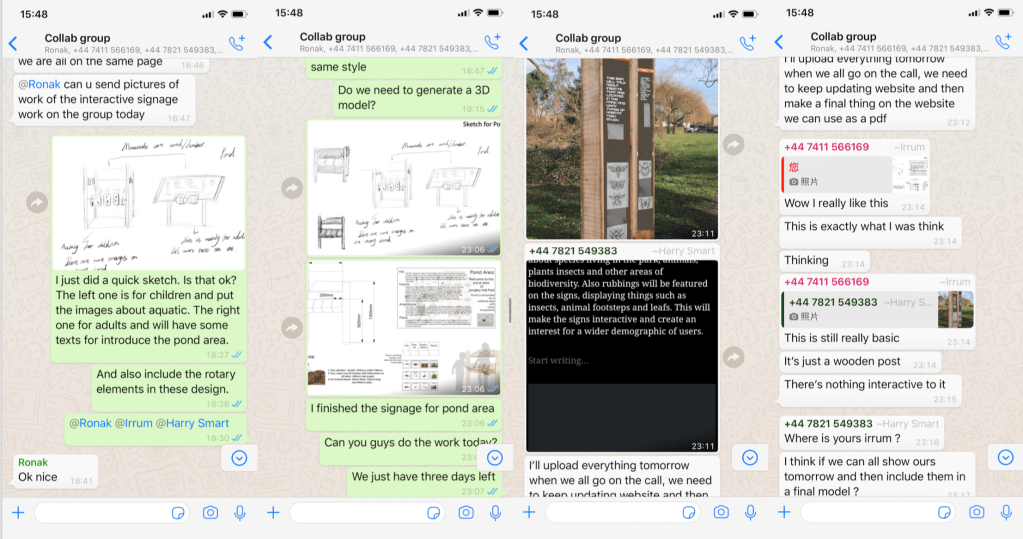
3. Because of special circumstances, we almost always do the group discussion online. In the early stage, we would discuss our design ideas every day, and after every meeting with the tutor, we would make an appointment to make a phone call to discuss how to sublimate our design concept, and list the tasks for everyone. (images 1) we will also send our homework to the group and ask the team members to discuss and give feedback on everyone’s homework. If everyone thinks the homework is well done, that person will finish it. If the team members think it needs improvement, that person will improve and correct the work. (image 2) Group cooperation enables members to supervise and urge each other, and this group cooperation also increases my ability to cooperate.

In general, as students of design, everyone’s ideas are relatively independent. However, in the future working life, it is impossible for a single person to complete all the design, will certainly work with people from all walks of life. This group cooperation made me realize this situation in advance. In the future group cooperation, I will listen to everyone’s opinions carefully, respect everyone’s ideas, and actively complete my task and discuss with everyone.
Amanda

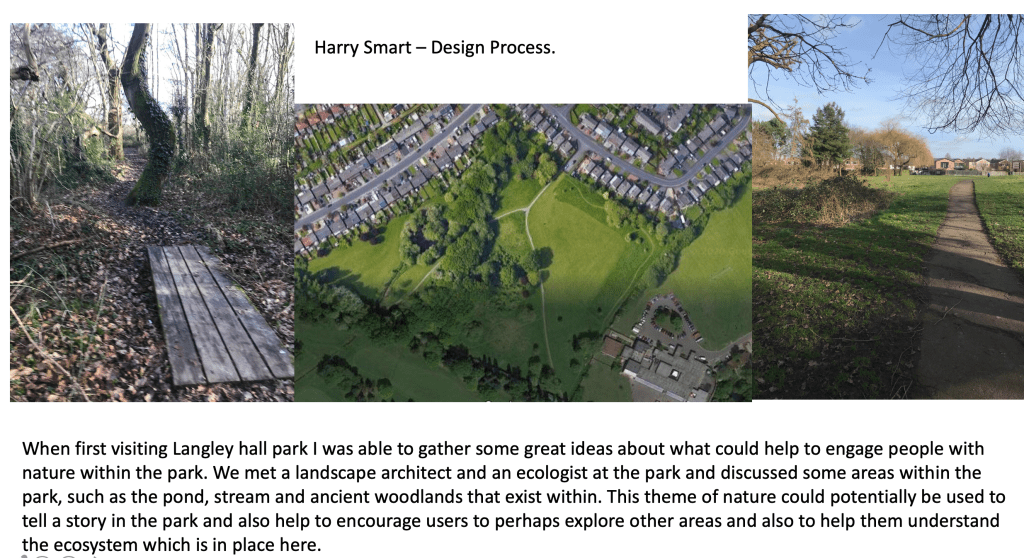
The site is located in Soilhull. From the south of the park a golf course is loacted which also has water stream from the golf course into the park which collects the water in a pond on the site.
To the south east there is alley leading to and fro from the park. Also there is a entrance to a school from the park.
In the west there is entrance to the park. The western and northern boundary has a line of houses of the local residents.
Design Brief : TO CREATE NEW INTERVENTIONS ON THE SITE AND DESIGNING A NEW PATHWAYS. TO ALSO CREATE MEASURES TO IMPROVE INVOLVEMENT WITH THE LOCAL RESIDENTS.
Interventions.
There are also new pathways leading to and through different parts of the park like the payhs to the woodlands, ponds, school.
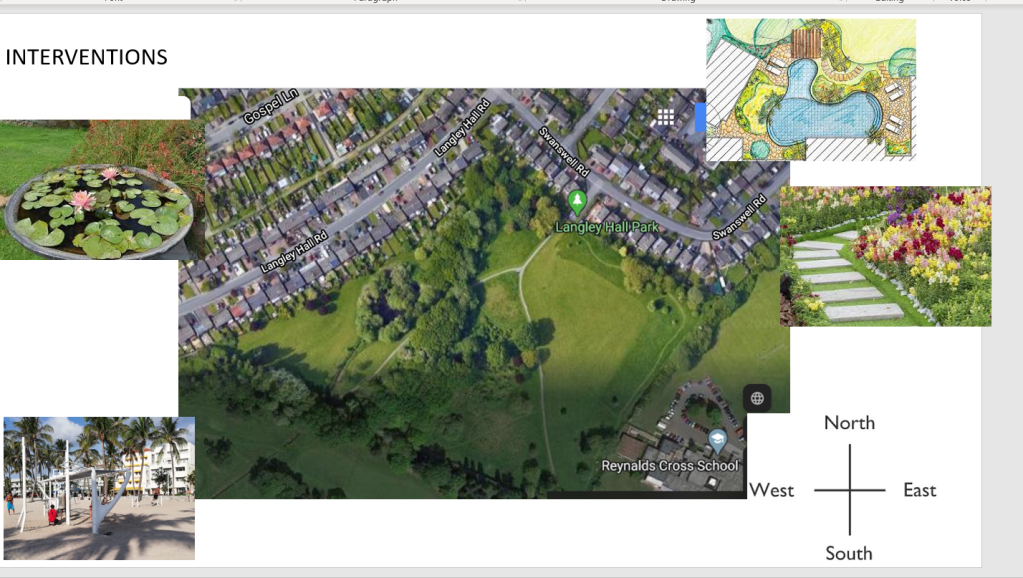
A design idea I had was to clean the shrubs and dead plants around the pond to make it more inviting, although after having discussed this with my group we decided that this didn’t fit our concept which is interactivity as we are designing signage posts for the woodland, pathway and pond area. Nonetheless I have still included my development work.

Another idea I had was to include more dustbins for the animal waste, this requested by 2 local residents with pets, although we decided that as our budget is quite limited, we should just include the signage posts but I have still included my development work even though they will not be included in our interventions.

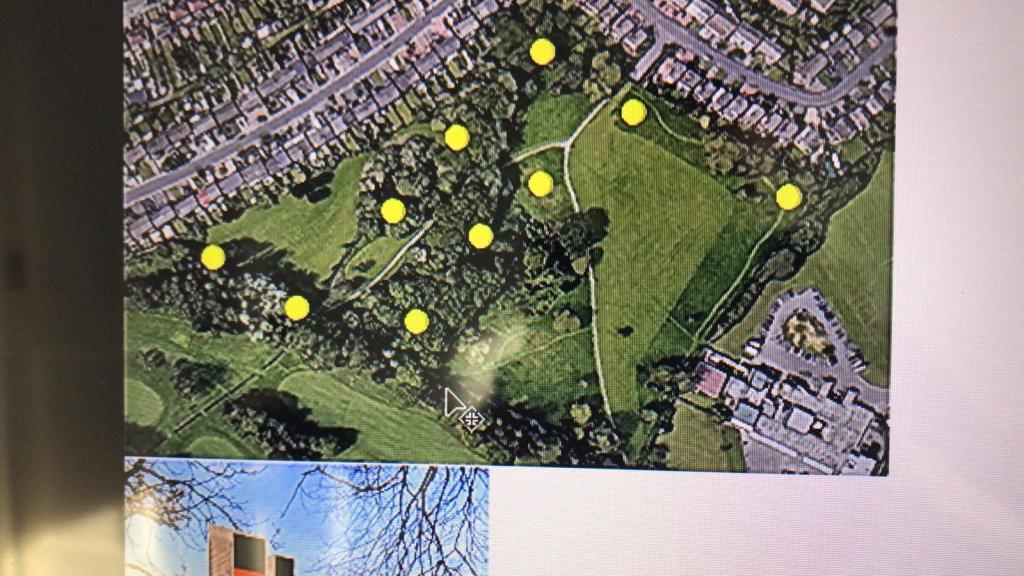
These yellow marks represent where each signage post will be place withing the park.
Signage points on the site
Signage for Pathway

Signage for Woodland
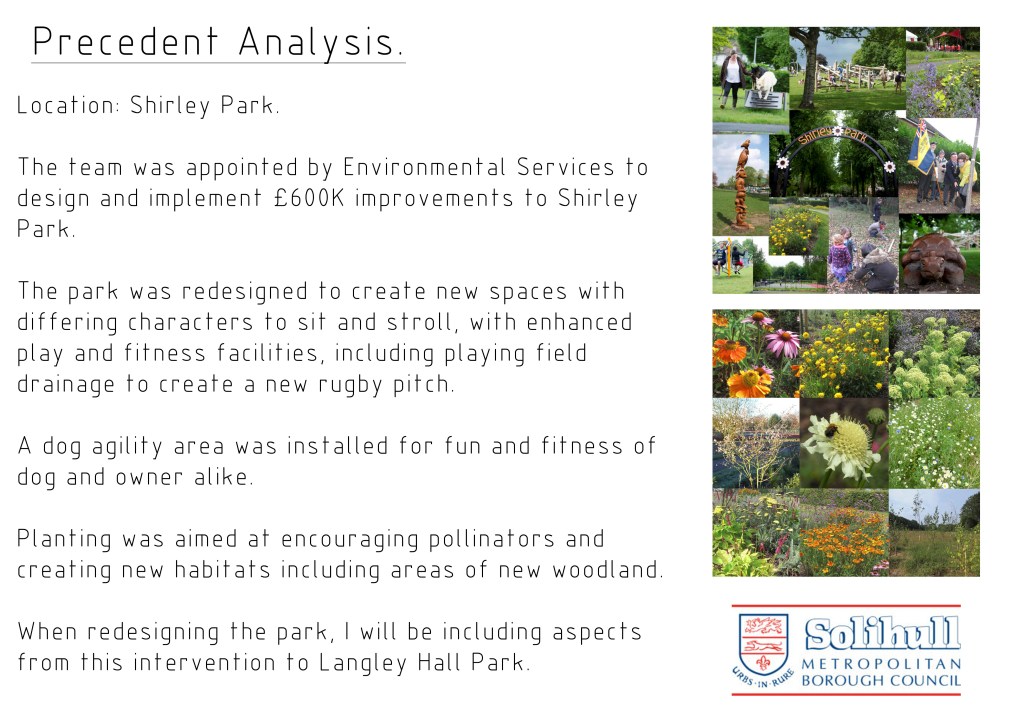
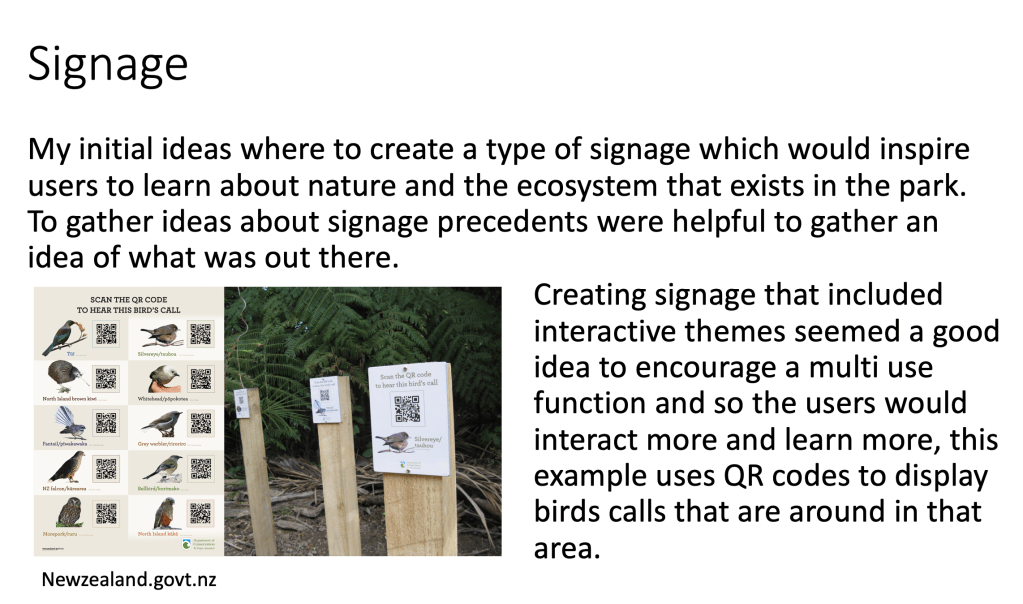
Here we have been looking into areas specific for signage and also the strengthened pathway destinations. These all are relevant in order to find the best routes which could help with the signage from an educational point. For example having specific signs next to the pond and other wildlife areas that may be particularly interesting.


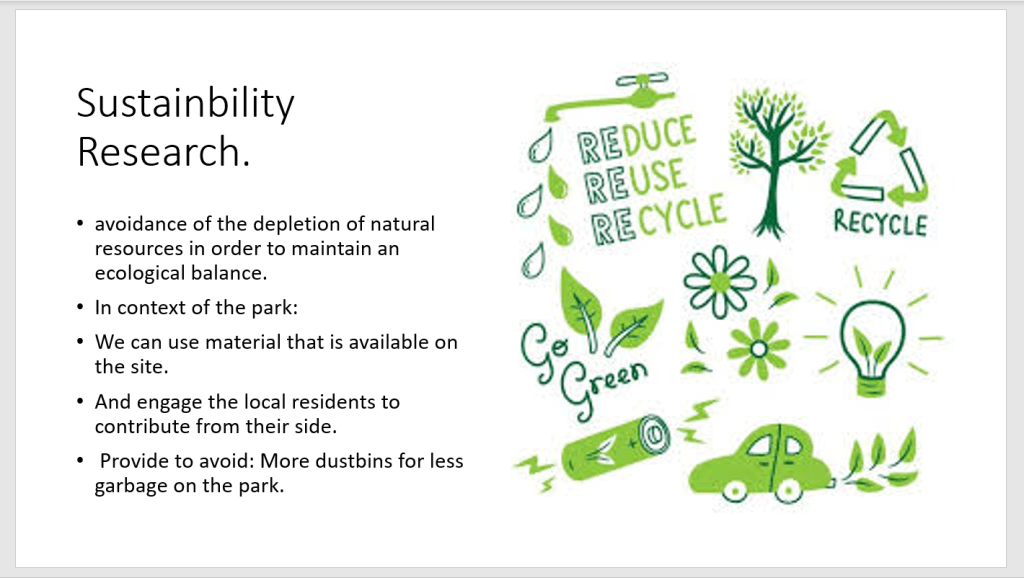
Sustainability
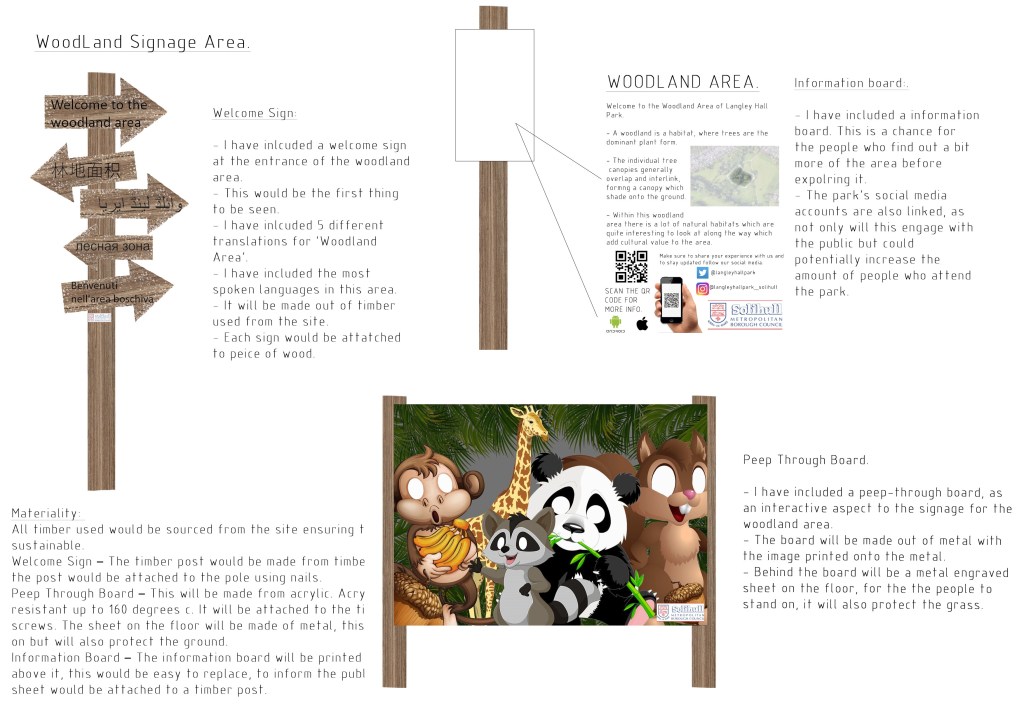
Signage for the Woodland Area for Langley Hall Park- Irrum
Welcome Sign.
I have inlcuded a welcome sign at the entrance of the woodland area. This would be the first thing to be seen. I have inlcuded 5 different translations for ‘Woodland Area’. I have included the most spoken languages in this area.It will be made out of timber used from the site.Each sign would be attatched to peice of wood.
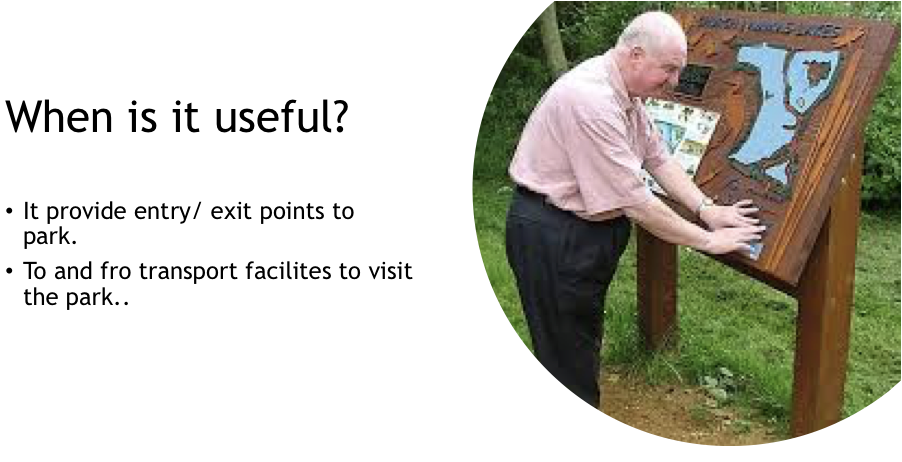
Peep Through Board.I have included a peep-through board, as an interactive aspect to the signage for the woodland area.The board will be made from acrylic with the image printed onto the acrylic.Behind the board will be a metal engraved sheet on the floor, for the people to stand on, it will also protect the grass.
Information board.I have included s information board. This is a chance for the people who find out a bit more of the area before exploring it.The park’s social media accounts are also linked, as not only will this engage with the public but could potentially increase the amount of people who attend the park.
Materiality:
All timber used would be sourced from the site ensuring the interventions created are sustainable.
Welcome Sign – The timber post would be made from timber soured from the site. The arrows on the post would be attached to the pole using nails.
Peep Through Board – This will be made from acrylic. Acrylic is weather resistant as it is heat resistant up to 160 degrees c. It will be attached to the timber posts using exterior timber screws. The sheet on the floor will be made of metal, this will create a base for people to stand on but will also protect the ground.
Information Board – The information board will be printed on an a4 sheet with an acrylic sheet above it, this would be easy to replace, to inform the public of any new events taking place. The sheet would be attached to a timber post.
Amanda
Through our site analysis, we found that pathway signage and signage for education are needed in this site. So the four of us have different work of signage design.
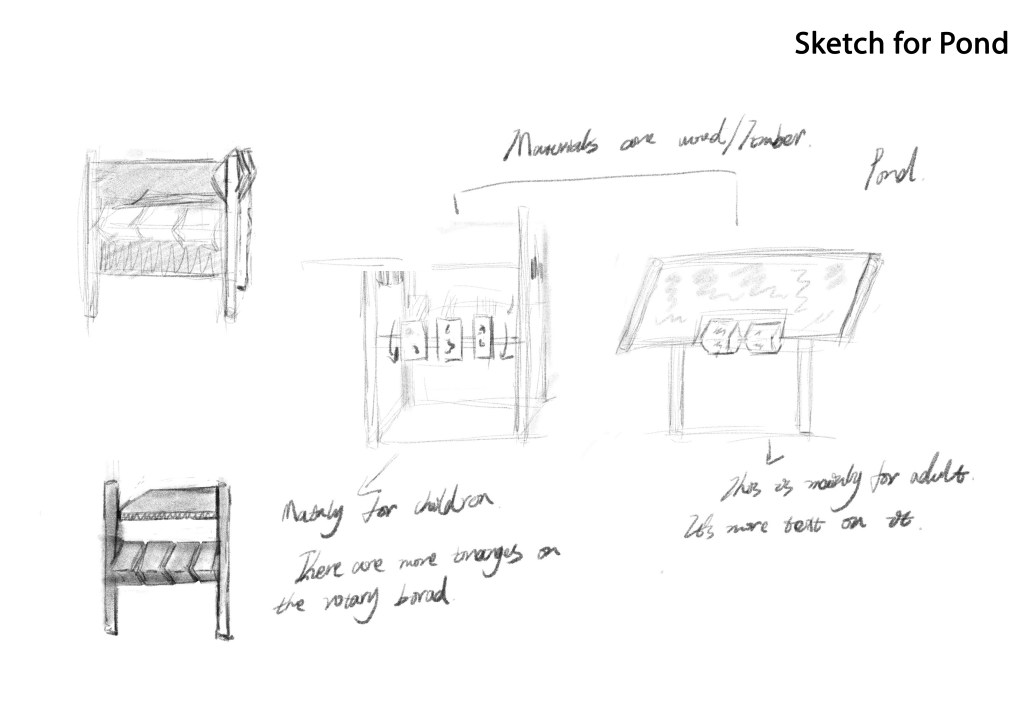
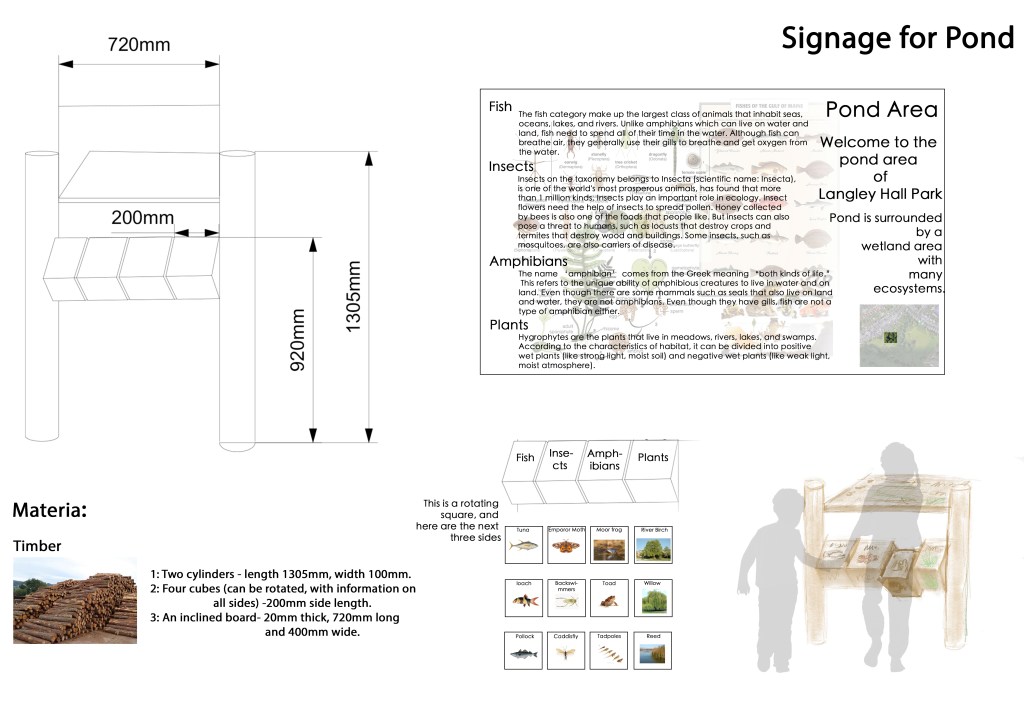
My main responsibility was to design the signage for the pond. So I used the shape of the water drop as my inspiration, and designed the logo of the water drop bottle shape for the pond. I have two different plans for the selection of materials. The first plan is to choose the material in the bottle body with transparent wood, which is a relatively new material and the hardness is hard enough, not only can support the wood on the bottle, but also more beautiful, but faced with two problems, how to fix the wood board on the top and how to make the shape of the arc, there are relatively big technical difficulties. My second material plan was to use basket weaving and bamboo. Not only is the weaving simple, but bamboo is a fast growing plant, and there is too much bamboo growing on the site, which can be harvested locally. It is also easy to make the shape and the price is reasonable compared with the first plan.
From this cooperation, I learned that it is very important to communicate and cooperate with everyone. Because everyone has different ideas, but through discussion, a perfect design idea will come out. In this collaboration, because Ronak studied product design, so through my communication with him, I learned how to design an object, how to make a simple object more interesting. In the future group cooperation, I hope we will have more communication..
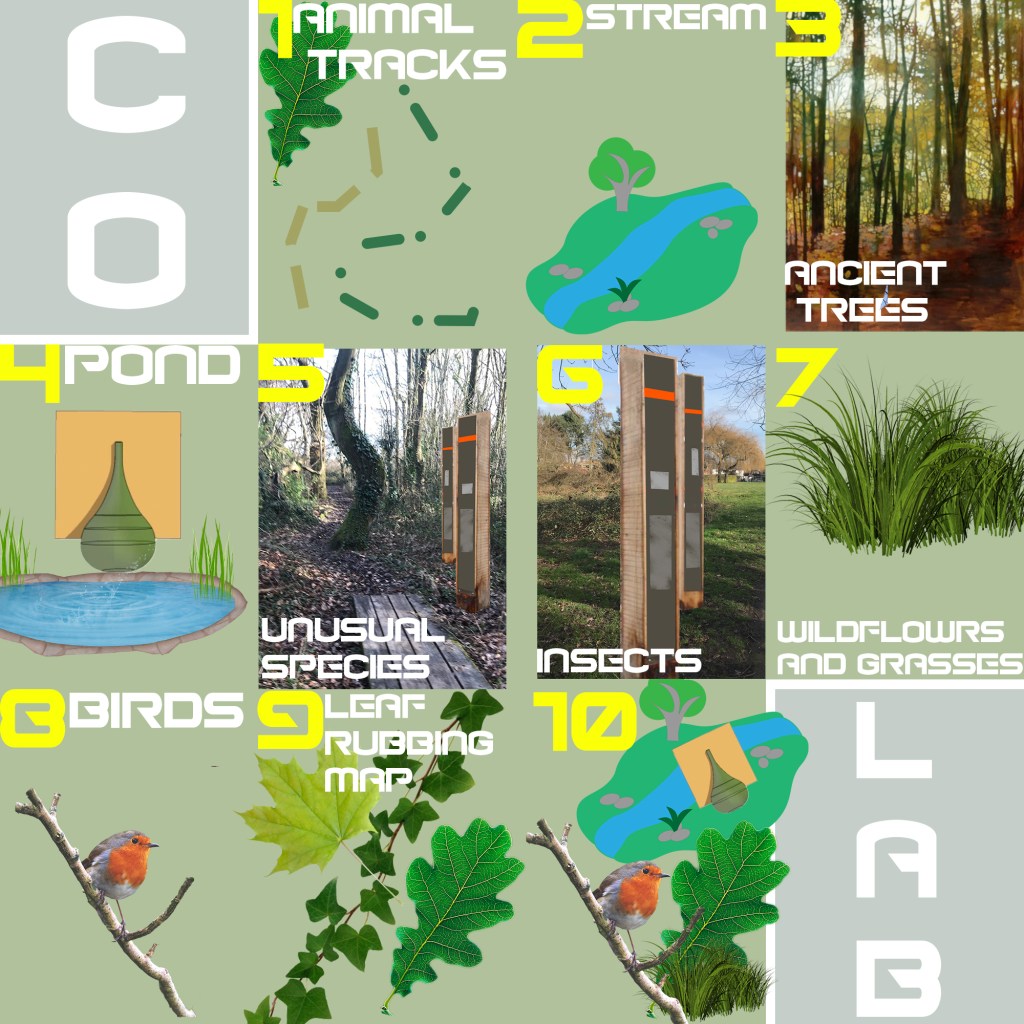
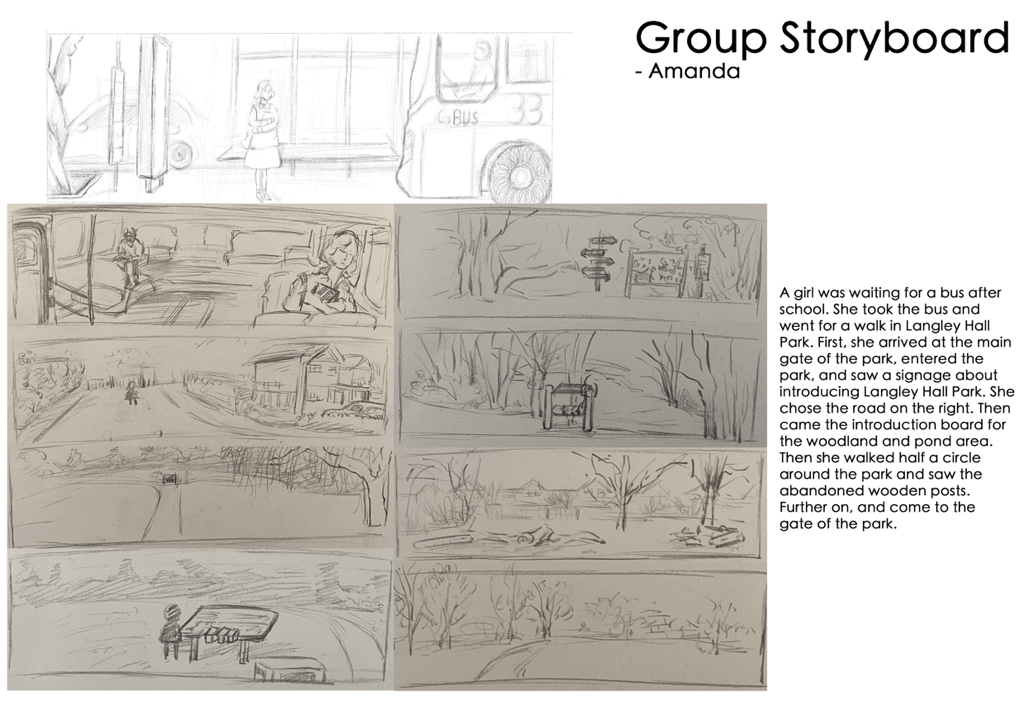
Here is a storyboard narrating what each of the signs across the park will refer to, this story board can help to create new pathways through the park and encourage users to gain interest in what species are around.
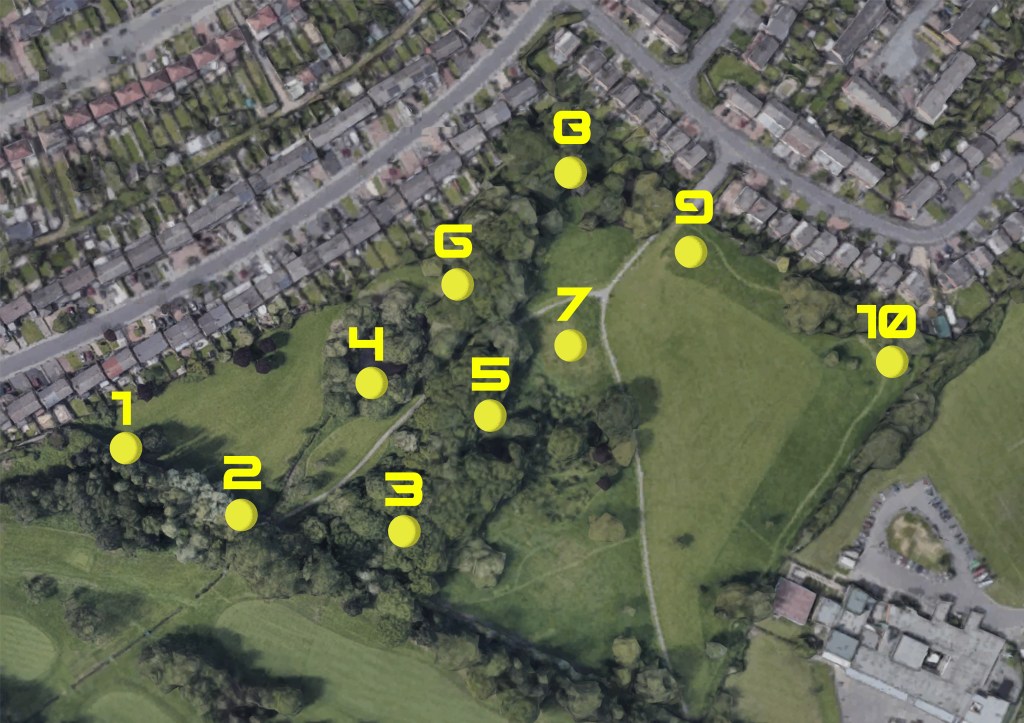
Map of signage destinations.
Harry
Have a WordPress.com account? Log in now.

